2025: A year in review
Hero Image
Hero Image
Rich Text
Image1

Rich Text
Image 2
Rich Text
April 2025 turned out to be a solid month, but one without any fireworks. Flow continued its strong run started in March and the pattern of admissions for Irish comedy-drama Four Mothers suggested that it was benefiting from strong word-of-mouth.
Literary and music documentaries have long performed well at GFT, and this was again demonstrated in April when we turned out to be the best-performing cinema in the UK on two titles – Sinéad O’Shea’s excellent Blue Road: The Edna O’Brien Story and One to One: John & Yoko from directors Kevin McDonald and Sam Rice-Edwards. The latter ended up being our biggest hit of April.
Opening its run in April and continuing through May came Ryan Coogler’s Sinners – it would ultimately be our third-biggest title of the quarter but just failed to take a spot in our Top Twenty of the year.
Following the huge success of our 50th Birthday programme in May 2024, we have decided that we should have a series of special Anniversary screenings every May. While the size of this programme was reduced in 2025 (apparently, it’s only me that celebrates turning 51 as hard as the Big 5-0), the appeal of this year’s selections was no less diminished with the likes of Singin’ In The Rain, The Big Lebowski, and a quartet of titles commemorating the work of the late great David Lynch.
As a general rule, films which play well at GFF go on to deliver solid numbers on their general release here. However, that is not always the case. One of our most popular titles at GFF this year, Lorcan Finnegan’s The Surfer starring Nicolas Cage just never replicated that performance on its general release in May. Frustratingly, this same pattern had been also seen earlier in the quarter by Jed Hart’s intense debut feature, Restless, which might have been just too intense for general audiences.
On the other hand, our Opening Gala film Tornado was one of our biggest June titles, while Closing Gala title Make It To Munich went on to become our best-performing documentary of the year. (However, this has been the first year in quite some time where a documentary has not featured in our overall Top 20. We are monitoring this to see if it is part of any wider trend or just a one-off.)
The period around the end of May and start of June is often our quietest of the year, but that was not the case in 2025 with the release of our two biggest titles of the quarter in back-to-back weeks. First up was the latest film from Wes Anderson, The Phoenician Scheme. Regular attendees of GFT and readers of these annual reviews will know just how much GFT audiences are drawn to this director’s work. However, while his new film still delivered the best numbers of any film in the quarter, they were still around 40% down on Anderson’s four previous features at GFT.
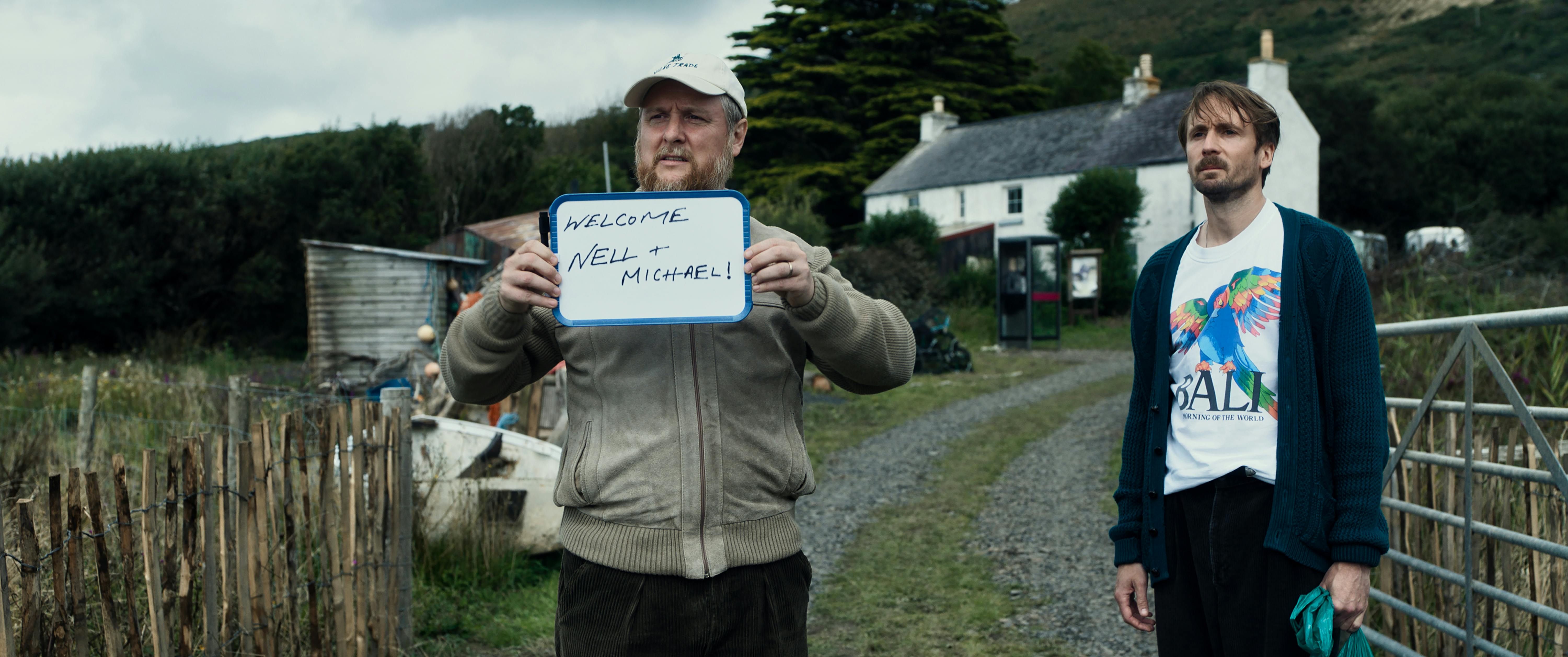
Just one week after Anderson’s latest, our second-biggest title of the quarter opened – The Ballad of Wallis Island was clearly a strong word-of-mouth favourite with wide appeal across all demographics, as demonstrated by the strong numbers it consistently delivered regardless of day or time. Such was its undiminished appeal, it went on to claim a new record at GFT, becoming the first title ever to play seven consecutive weeks here (beating the six-week run last year of Kneecap). Meanwhile, 28 Years Later also delivered some solid numbers in the latter part of June.
June also saw a “Battle of the Michaels” as we simultaneously held CineMaster seasons of the works of directors Michael Haneke and Michael Mann. In the end, it was a comfortable “victory” for the American, giving him a Top 10 ranking among all CineMasters, nicely sandwiched between Terrence Malick (February 2024) and Billy Wilder(November/December 2018). However, Mann did not provide our biggest CineMaster season of the year; that was to follow in the next quarter.
Admissions for the quarter just fell short of the 37,000 recorded in the equivalent period of 2024. Again, this was bang in line with our targets and amounted to our fourth-busiest spring quarter on record. Further, it was our wider programme that again got us there rather than a reliance on one or two titles or special seasons. That said, we’re all looking forward to celebrating the Big 5-2 next May.
Image 2

Rich Text
In recent summers, we have been perhaps lucky to have screened some exceptionally popular titles such as Oppenheimer and Barbie (2023), and Kneecap (2024). However, as previously mentioned, the outlook at the start of the year was not encouraging and that picture never really changed the closer we got to the summer.
For a while, it even looked like the quarter would return admission numbers lower than our spring total. However, a small rally through September meant that our summer attendances beat our spring number – by just 36 admissions. We missed our quarterly target by over 6,000 admissions – the biggest one-quarter deficit in recent memory. Aggregate admissions were 10% down on the previous summer’s total, which was itself 10% down on 2023.
The reason was really quite straightforward. Most of the summer’s new releases struggled to draw any decent-sized audiences – here at GFT or elsewhere for that matter. GFT regularly ranks in the top-five best performing venues in the UK on the titles we play, and that pattern did not change over the summer. Our ranking remained pretty much the same; it was just that numbers were generally down across the board.
Our repertory cinema screenings are a key part of our whole programme, but we also know that they just don’t draw in the kind of audience numbers at GFT as new titles. This year, admissions for our reissue and repertory screenings over the summer were well over double that of previous summers. Indeed, five of the top 10 titles at GFT across the quarter were reissue/repertory titles – La Haine, Barry Lyndon, In The Mood for Love, Amadeus and Ran. The message from much of our audience was clear: they still wanted to come to GFT and if the new releases weren’t drawing them in, they would come see an old classic instead.
This was further demonstrated by the fact that our three CineMasters seasons over the quarter also knocked it out of the park – David Cronenberg in July, Rob Reiner in August (becoming our best-performing CineMaster in that month slot) and Wong Kar-wai in September. That last selection was not just the best-performing CineMasters season of the year, but ranks second across all seasons since we launched the strand in 2017 – still some way behind Christopher Nolan in 2022 though. Modesty prevents me from mentioning here who it was at GFT that was responsible for suggesting Reiner and Wong this summer. Well, moving on…
Only one new release over the summer found a place on the Top 20 chart for the year – Andrew DeYoung’s Friendship starring Tim Robinson. Our next two biggest films – Eddington and Sorry, Baby – just scraped into our Top 40. But GFT also ranked in the top-three UK venues on all three of these titles.
September also saw the 17th edition of the Glasgow Youth Film Festival (GYFF) at GFT. With total attendances of 2,000 over that last weekend of the month, it wasn’t just our biggest GYFF to date – it delivered almost double the numbers of the previous record high. Simply put, every event proved to be popular, but the hottest ticket was definitely for the Closing Gala screening of Sing Street, complete with live performance from star Ferdia Walsh-Peelo and his band, The Fynches. No pressure then, Team GYFF 2026!
I want to close this section with a plea to film distributors: GFT (and all independent cinemas across the UK) want to encourage distributors to release more quality and audience-attracting product throughout the year, rather than saving it all for the autumn and winter months. Audience numbers are down in the summer here because of the new titles we have available to screen, not because audiences are automatically staying away when the weather is good. Indeed, history tells us that if the product is good, audiences will attend in their droves – even when the sun is out. The audience is there, we know that – we just need distributors to help us get them in. We will continue to plead the case here.
Image4

Rich Text
While admission numbers at the end of September were encouraging, it really did not come close to what was to follow at GFT for the rest of the year. Of our top 20 new releases of 2025, eight were released in the final quarter of the year.
First up, there was Paul Thomas Anderson’s One Battle After Another (which opened on September 26) which managed to deliver one of the biggest opening weeks of the year at GFT despite often having to play in Screen 2 because of the popularity of other one-off screenings that week – such as some of our GYFF titles). By the end of its run – including seven later screenings on 70mm – it had become Anderson’s second-biggest hit ever at GFT, only just falling short of Licorice Pizza (2022) but doing so on just three-quarters of the number of screenings.
In the same week as the release of the new PTA movie, we were also the top performer in the UK on the one-off screening of Radiohead X Nosferatu: A Symphony Of Horror.
We then teamed up with BFI London Film Festival (LFF) for a sixth year running, to bring the very best of their annual programme to GFT. In all, we had four sold-out screenings this year as well as two that very nearly sold out. Five titles in this group went on to be released in the weeks ahead to all claim a place on our year’s Top 20. The only title that didn’t (Hamnet) does not go onto general release until January 2026 – tickets on sale now! Total admissions of over 2,700 across the 12 screenings at GFT over the fortnight amounted to our second-busiest LFF year to date. (The 3,000 admissions achieved in 2022 is going to be a tough record to break clearly.)
GFT was honoured to host the UK Premiere of I Swear, the new film from director Kirk Jones about the life of John Davidson, the Tourette’s awareness campaigner, starring Robert Aramayo, Maxine Peake and Peter Mullan. It was a very wonderful and special night that those in attendance won’t forget in a hurry. It probably comes as no surprise to learn that in each of its opening two weeks of general release, the top 20 performing UK cinemas for I Swear were all based in Scotland – a rarity for such a widely released film. And thankfully, GFT was among that cohort both weeks.
Then in the last week of October came the new film from Guillermo del Toro, Frankenstein. Now this is a Netflix title, and they aren’t so keen on any cinema audience data on their titles being published. So I’ll keep this vague… It delivered our second-best opening week numbers of 2025, a little way short of the mark made by Nosferatu at the start of the year; its opening week ranking just outside our 10 best ever recorded. By the end of its run here, it had taken as much in the box office as the aggregate of del Toro’s three previous titles at GFT.
Released on the same day as Frankenstein, another returning LFF title, Kelly Reichardt’s The Mastermind starring Josh O’Connor, might have been squeezed out slightly but performed sufficiently well in Screens 2 and 3 to claim a Top 20 spot by year’s end.
October was also packed with exceptionally well-attended one-off events like our All Day Horror Madness marathon, The Phantom of the Opera (as presented by Dundead), and a preview of the new documentary from acclaimed director Asif Kapadia, Kenny Dalglish. And they were all in the same week.
In a month of wall-to-wall smashes, we still had room for two minor disappointments – namely, Benny Safdie’s The Smashing Machine – which failed to live up to its name – and Ballad of a Small Player – falling well short of director Edward Berger’s previous two features at GFT. Both titles were simply crowded out by the bustle of the month’s numerous big hitters.
November opened with our Scotland Loves Anime (SLA) weekend, now celebrating its 16th edition. And it turned out to be our most popular yet, smashing the record set in 2019. Interestingly, only one title actually sold out – although some others went mightily close – but every title over the weekend performed strongly. The best performing SLA titles this year were: Angel’s Egg, Vampire Hunter D: Bloodlust and Chainsaw Man the Movie: Reze Arc.
The month of November also saw the release of four titles which had all featured in the previous month’s BFI London Film Festival and then went on to deliver knock-out numbers for GFT:
• Bugonia, the latest film from director and GFT audience favourite Yorgos Lanthimos and starring Emma Stone and Jesse Plemons – while it became a solid Top 10 title, it only ranks a distant third among the director’s titles at GFT; but then Poor Things is the third-biggest box office hit in GFT’s history and The Favourite ranks in the Top 20
• Die My Love, director Lynne Ramsay’s fifth feature, starring Jennifer Lawrence and Robert Pattinson – this played at LFF but was announced too late to be added to the touring selection in October; a solid performer here but not well enough to match Ramsay’s best performing film at GFT, which continues to be her debut feature, Ratcatcher. (It is Jennifer Lawrence’s biggest title ever at GFT, however, which incredibly had previously been Winter’s Bone from 2010. Meanwhile, it’s #2 on Robert Pattinson’s GFT ranking, some way behind The Lighthouse.)
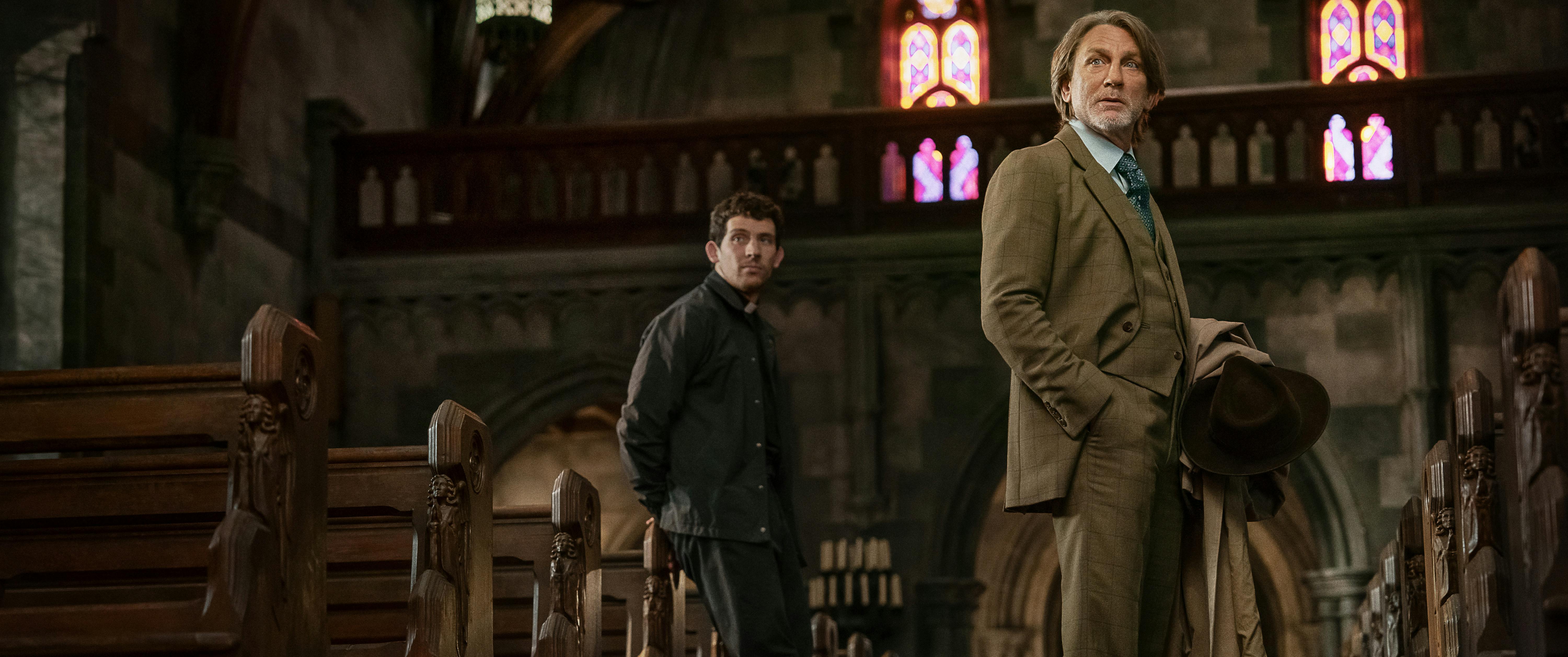
• Wake Up Dead Man, the third film in the Knives Out series, starring Josh O’Connor (again), Daniel Craig and possibly the best cast of the year – again, a Netflix title, so quietly does it, but I can acknowledge that its box office performance at GFT only just fell short of the combined total of the first two films.
• Pillion, the bold debut feature from Harry Lighton starring Harry Melling (who knocks his acting socks off) and Alexander Skarsgård (who scrubs up very well) – such was its pattern of admissions, this was another contender for “word-of-mouth hit of the year” here.
On top of all that, we also delivered one of our strongest French Film Festival editions in some time, a much-loved programme of BFI-backed titles under the banner Too Much: Melodrama on Film and a sold-out screening of Prime Minister, with former New Zealand PM Jacinda Ardern in attendance for a Q&A (and which went on to have a solid performance on its general release). All of these titles ensured that we avoided the short, sharp dip in admissions in late November/early December that had been a recurring pattern here since 2019.
As I write this, our Christmas programme is now upon us and presently sales on our seasonal titles are tracking 7% ahead of last year’s. If this momentum continues, it will be our third-busiest Christmas programme ever, a little short of the records set in 2017 and 2018 when we were helped by Christmas Day falling on a Monday and a Tuesday respectively – there is a logic to that statement, trust me, but it may require a bit of lateral thinking to work out. Interestingly, sales on It’s A Wonderful Life are a little down on last year, but that has been more than compensated for by record ticket numbers on The Muppet Christmas Carol, The Holdovers and The Bishop’s Wife.
So in a remarkable turnaround from our summer, our latest projection for the final quarter of the year is that we’ll achieve admissions well in excess of 65,000. That represents a c.14% increase on the equivalent autumn 2024 total and more than 8,000 admissions ahead of our target set at the start of the year. If this estimate is accurate, it would not just be our busiest quarter of the year (in itself, a rarity), it would also be GFT’s busiest autumn quarter ever.
Image 2
Rich Text
As at time of writing then, we estimate that we will close the year on total admissions of between 200,000-201,000 – that’s just 2% ahead of our prior year total, but more importantly is more than 2,000 admissions ahead of the challenging target set at the start of the year. This would amount to the third-biggest admissions total ever achieved in GFT in a calendar year – just a fraction behind 2017 and 2018.
The blunt fact, however, is that GFT now has to hit these high marks consistently and indeed aim to push through them if we are to achieve our goal of returning to a “break-even” position for the first time since reopening after the pandemic. Increased financial support from Creative Scotland announced at the start of the year has greatly assisted us in this journey, and we are on target to return to “break-even” operations next year. But the onus is definitely now on us to deliver on admissions, as well as working hard on all of our income streams to support our costs.
The other remarkable thing about this year’s grand total is that it was achieved without a single new entry into our all-time Box Office Top Ten – which is the first time this has happened in at least 20 years. To be clear, this is a good thing – it demonstrates that our wider programme is drawing audiences in and that GFT is not relying on a small number of “blockbuster” titles to keep us operational.
We would not be in this solid position without the ongoing faith and support of our audiences and the dedication of staff and volunteers across GFT and GFF. Thank you to you all!
Obviously, I cannot mention everything we screen here at GFT. Indeed, only a small proportion of the films we screen do better than “break even”. But crucially, it is those films that allow us to deliver our diverse, sometimes niche, sometimes challenging programme of around 650 films every year. So while we celebrate our best-performing titles for good reason, I don’t want to dismiss everything else that we screen. Every title is important to Glasgow Film’s being.
This annual review is focused on the admissions numbers and primary titles of the year. But Glasgow Film is more than just a cinema screening films 361 days a year. Away from the glitz of our Festivals and the buzz of our major titles, there is so much more going on here that I don’t have space to talk about – from our extensive education activities with schools and young people, our community outreach work, and our renowned industry and talent development programmes. I hope that we can share more of these great stories in 2026.
While our box office and bar sales cover around 50% of our annual costs, the rest of what we do depends on the generosity of funders and people who believe in the power of shared cinema experiences.
If you are able to, please consider making a donation or becoming a member. Your support will help us keep the projectors humming and the stories flowing through the year ahead.
Thank you again for being part of our ongoing story.
As always, Christmas titles are excluded from the listings below.
TOP FIVE DOCUMENTARIES OF THE YEAR
5. Blue Road: The Edna O'Brien Story
4. Prime Minister
3. The Golden Spurtle
2. One to One: John & Yoko
1. Make It To Munich
TOP TEN RE-ISSUES/REPERTORY TITLES OF THE YEAR
10. Spirited Away
9. Princess Mononoke
8. Ran
7. Amadeus
6. Perfect Blue
5. Heat
4. Barry Lyndon
3. Mulholland Drive
2. In The Mood For Love
1. La Haine
GFT’S TOP 20 NEW RELEASES OF 2025
20. The Mastermind
19. Nickel Boys
18. 28 Years Later
17. Friendship
16. Tornado
15. Mickey 17
14. I’m Still Here
13. I Swear
12. Die My Love
11. Pillion
10. A Real Pain
9. Flow
8. The Ballad of Wallis Island
7. Bugonia
6. The Phoenician Scheme
5. Wake Up Dead Man: A Knives Out Mystery
4. One Battle After Another
3. Frankenstein
2. The Brutalist
1. Nosferatu
Footer